
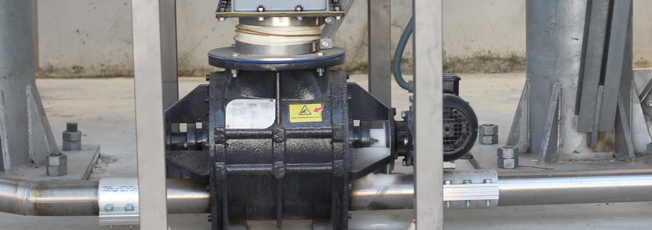
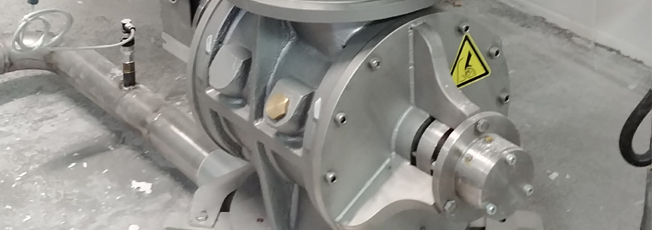
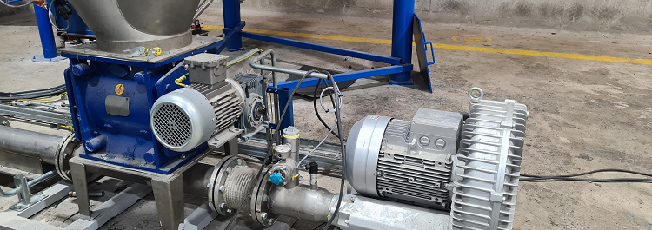
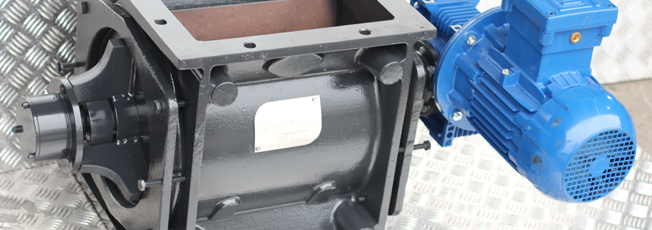
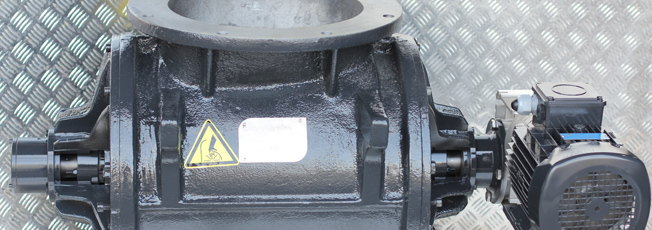
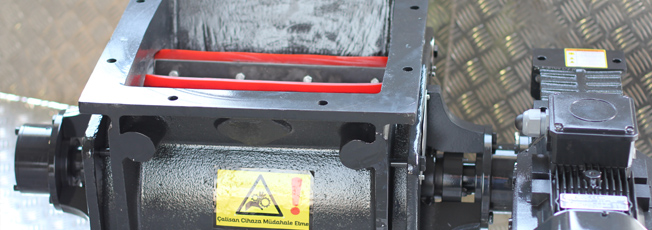
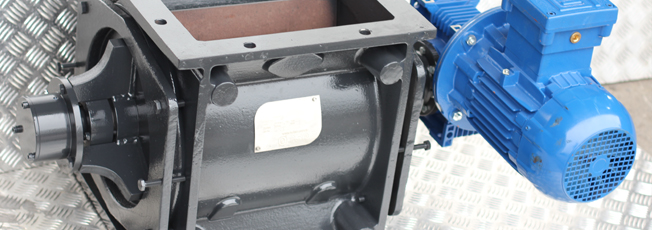
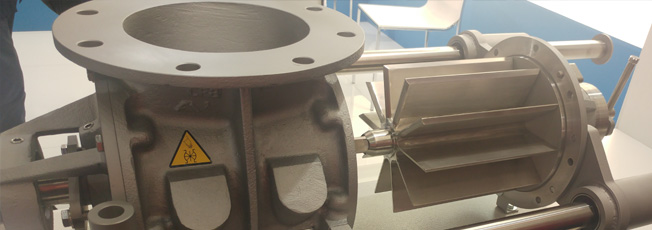
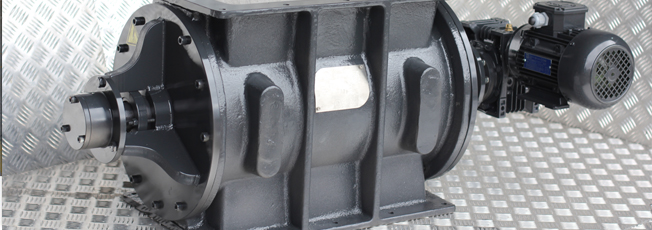
Although a rotary valve is a single machine, it performs different tasks depending on its position in the plant. The same housing and rotor work as a discharger in one place and as a feeder or dosing unit in another. For this reason, the point of use determines many choices, from the rotor type to the sealing elements.
Under jet pulse filters, cyclones and separators, the rotary valve discharges the collected dust while preventing loss of pressure or vacuum in the hopper. In this position the device works by gravity and releases the product, separated from the air, to the next piece of equipment. If the rotary valve leaks, the separation efficiency of the cyclone drops, and in a filter the dust is carried back up. For details of these applications, see our cyclone page.
At the start of a pressure conveying line, the rotary valve feeds product from a bunker or silo into the conveying air at a controlled rate. Here the device acts both as a feeder and as a pressure barrier. Models with pipe inlet and outlet connections that connect directly to the line are called rotary airlocks or blow-through valves; a standard rotary valve can also be connected to the line by fitting an adapter underneath. For more information, see our rotary airlock page.
Since the volume carried by the rotor on each revolution is known, a volumetrically constant amount of product can be delivered to the next process by adjusting the speed with a frequency inverter. Closed rotors or rotors with reduced pocket volume are preferred for dosing applications.
A rotary valve placed ahead of a crusher, mill or screen feeds the machine evenly and prevents overloading. Depending on the nature of the material, the rotary valve itself can also act as a crusher or work in conjunction with crushers.
For plants handling explosive dusts, see our ATEX rotary valves page.
To determine the right rotary valve for your process together, contact us with your product and line details.
 Rotary Valve Catalog (PDF)