
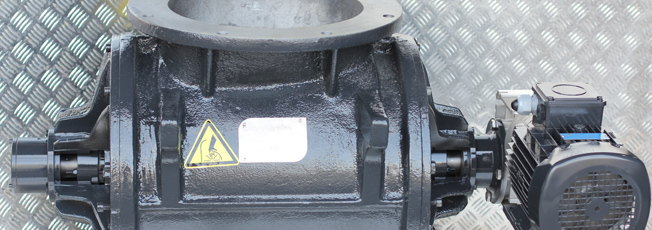
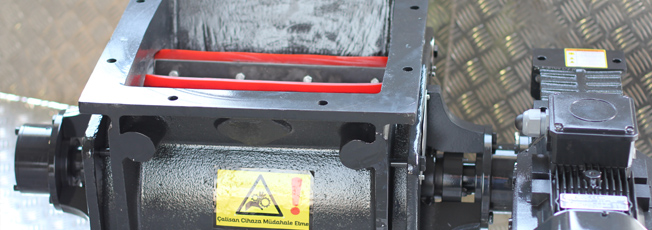

Conveying and separation operations in industrial processes sometimes take place at high temperatures. These applications typically include discharge under dryers, filter discharge on hot air extraction lines and centrifuge feeding on pneumatic drying lines.
In such applications, the temperature-induced expansion of the metal and the need for temperature-appropriate sealing elements directly affect the design of the rotary airlock / rotary valve.
In some cases, the housing and rotor may react differently to temperature. A system already designed around a tolerance of 0.2–0.4 mm may not be able to accommodate this expansion. For this reason, all rotary airlocks operating above 100 °C must have a different design.
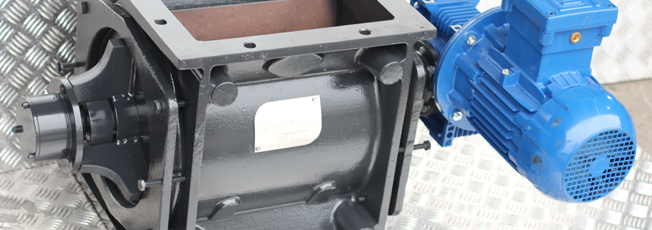
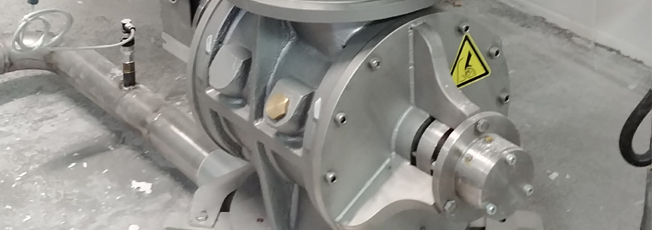
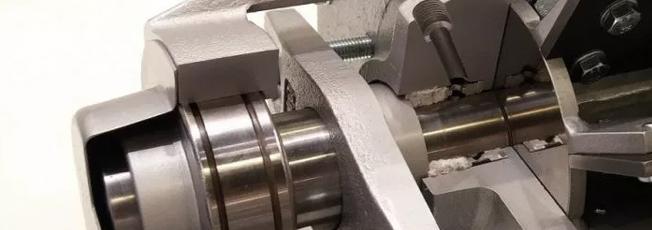
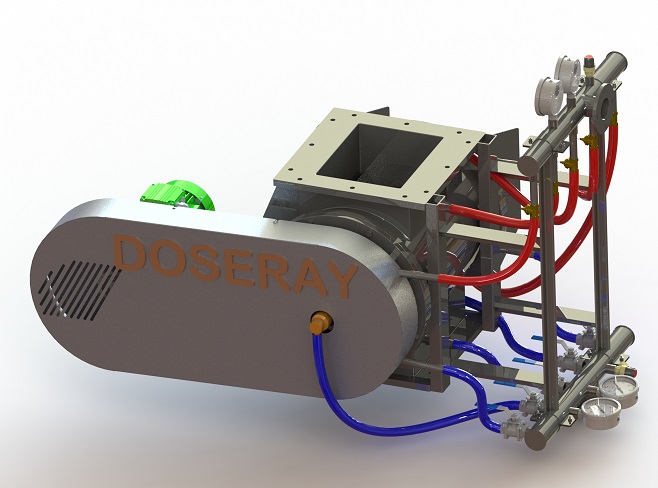
In some very high-temperature processes, special solutions such as a double-walled design (water/liquid-cooled) or atmospheric cooling are applied. The image below shows a rotary valve system designed for very high temperatures.
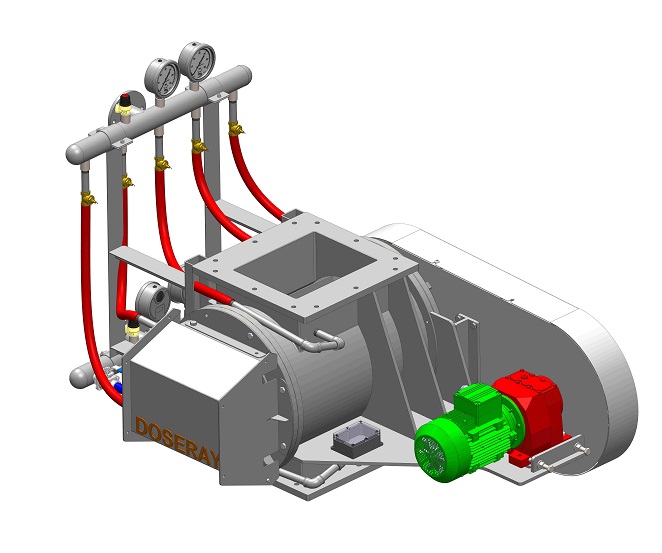
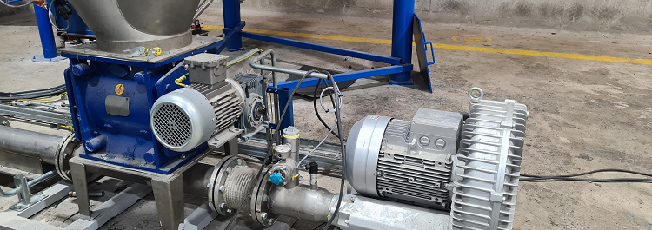
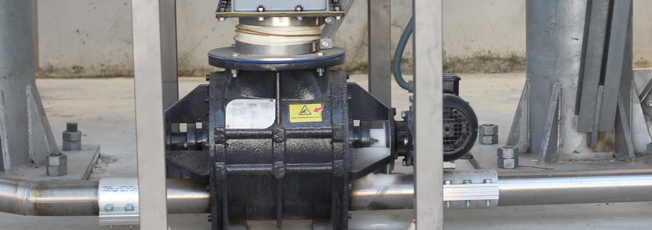
Our high-temperature rotary valves are used in much the same way as standard products; their design is simply somewhat more complex than that of their equivalents. They are used for the controlled discharge, metering and pneumatic conveying of high-temperature bulk raw materials. Liquid-cooled high-temperature rotary valves are generally used above +350 °C and are widely preferred in fly ash processes. A high-temperature rotary valve should in fact be seen as a system rather than a single piece of equipment, as it works together with several other systems (coolant, flow control devices, transmitters, etc.).
 Rotary Valve Catalog (PDF)