
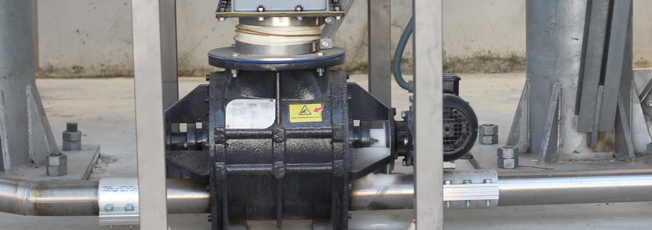
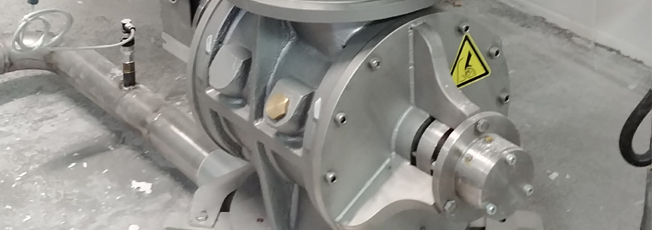
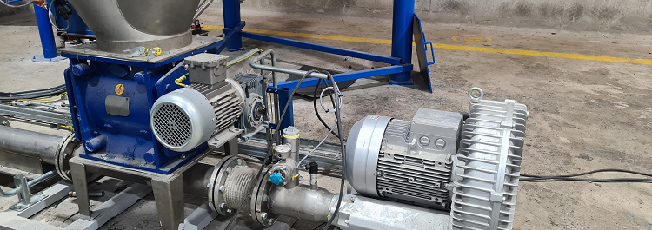
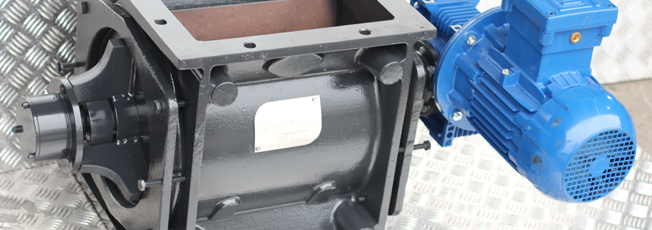
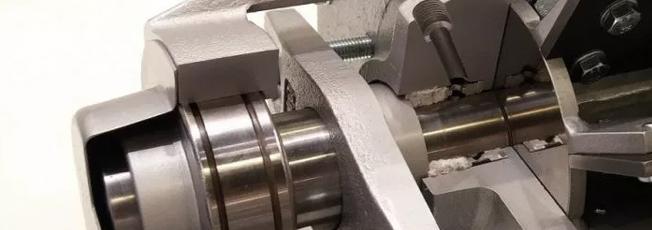
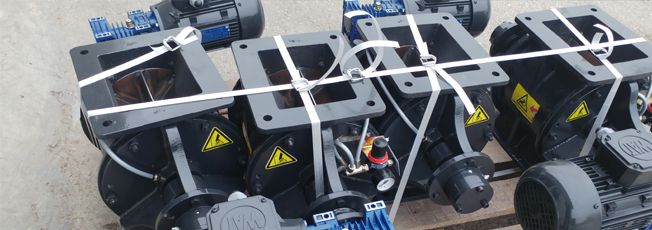
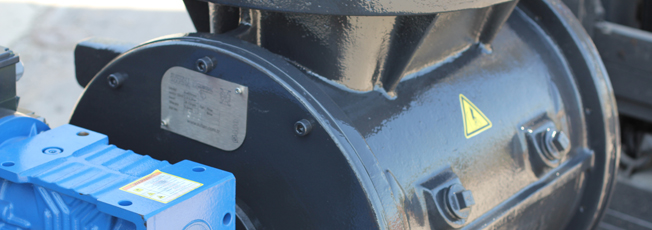
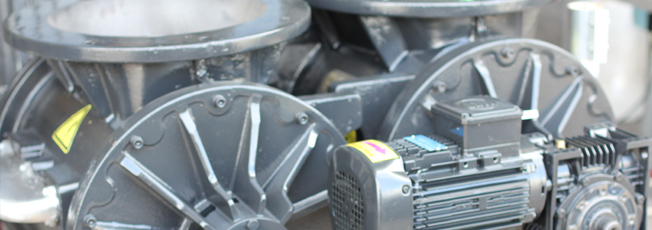
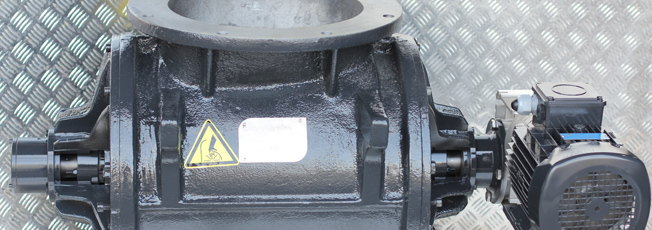
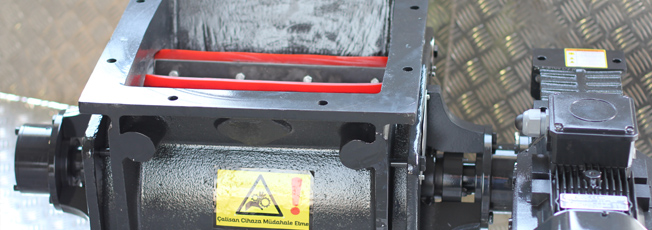
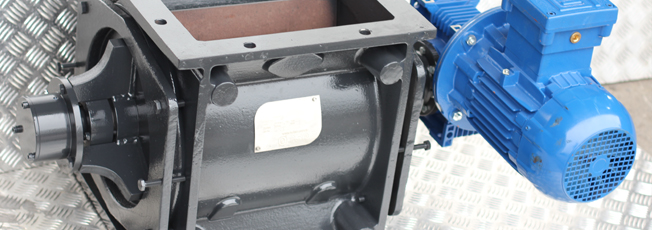
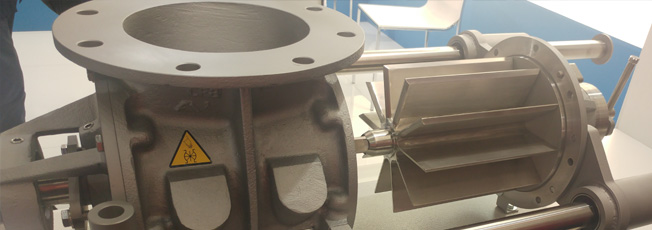
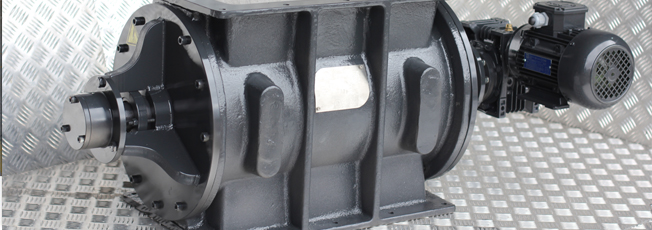

Rotary valves used in granule conveying systems differ from their standard equivalents. Key among these differences are aspects requiring specialist expertise, such as rotor type, product inlet, rotational tolerance, pressure and rotor speed. For hard granular materials such as PP, polycarbonate, PE and PET, used especially in the automotive sector, rotary valves designed specifically for these materials must be used.
If standard rotary valves are used, either the raw material or the rotary valve will be damaged. In addition, the design must be based on this information to prevent problems such as unplanned downtime and line blockages.
If raw materials from the mining sector, such as stones of various sizes, are to pass through the rotary valve, the design takes on a completely different dimension. For this reason, rotary valves for granules differ significantly even among themselves. These differences can be listed mainly as inlet type, rotor type and speed.
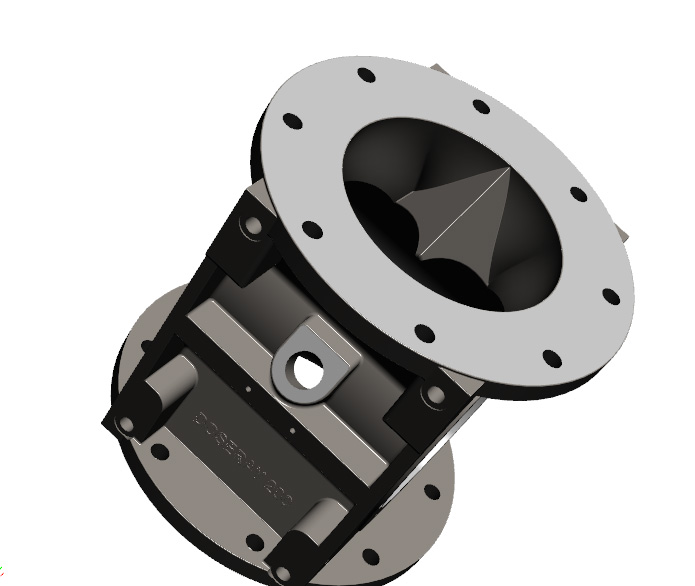
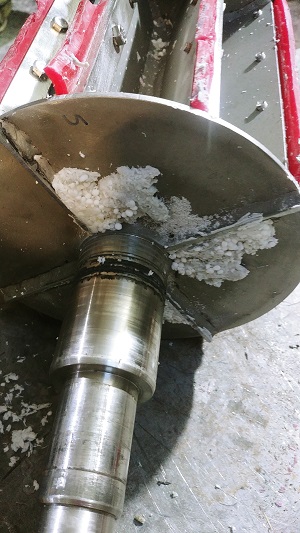
If the wrong rotary valve is selected for processes using granular raw materials, the material passing through it may be damaged. Rotary valves and airlocks used with granules must therefore have a different design from their standard equivalents. These differences can be examined under headings such as inlet options and rotor type.
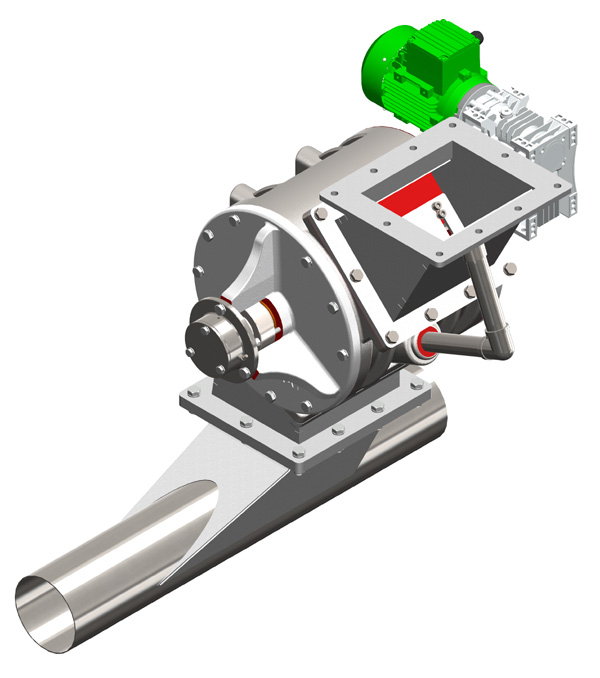
 Rotary Valve Catalog (PDF)