
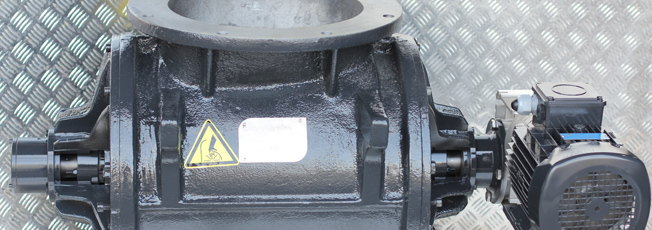
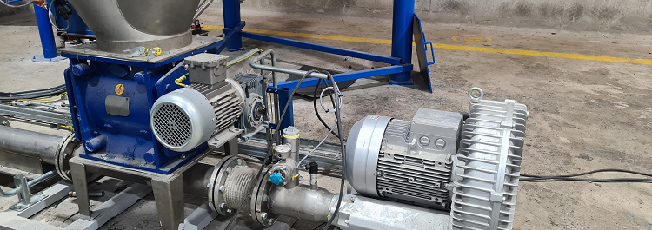
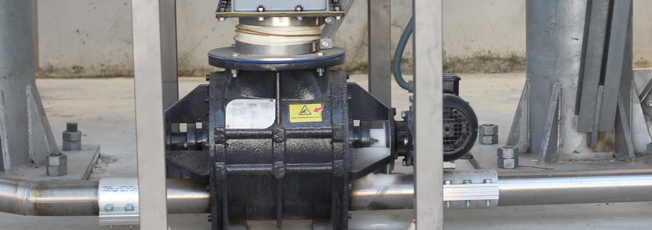
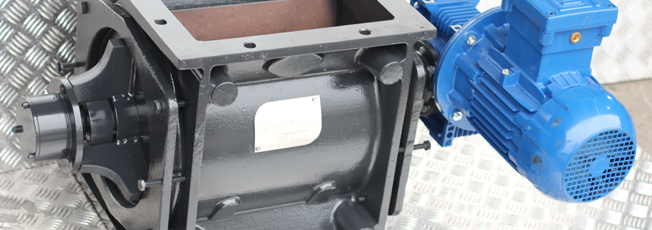
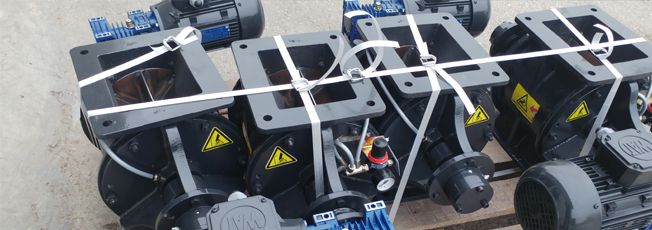
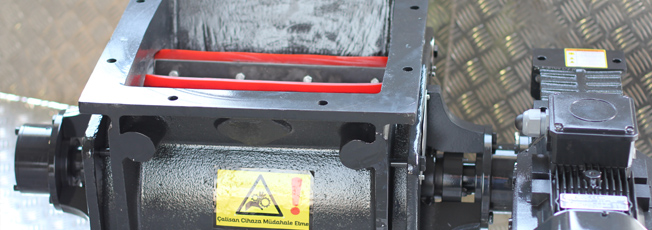

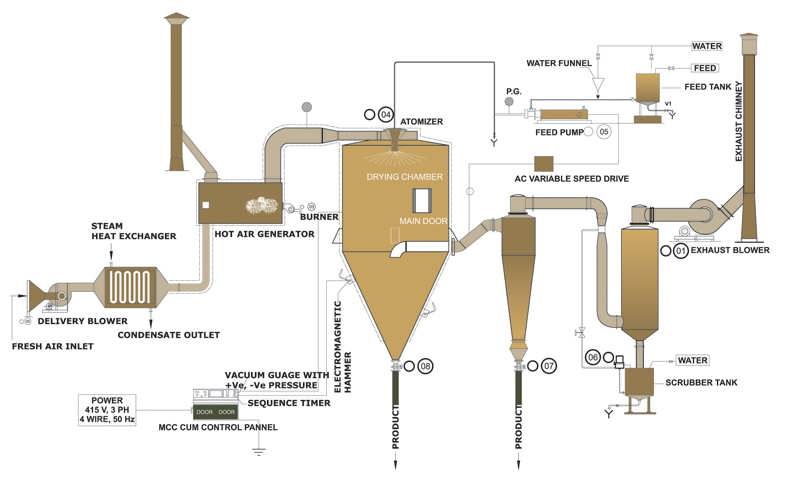
The rotary valve is generally used as a barrier between the spray dryer and the outside environment at the final stage of the product drying process. The product is discharged by gravity through the 60-70 degree outlet cone with the help of the rotary valve. Although this operation looks simple, it involves a delicate balance; so much so that this balance even affects the agglomeration structure inside the spray dryer. At first glance it may look like an ordinary rotary valve, but as the outlet element of the system it is always important. The system requirements mentioned above can be summarised under short headings as follows:
1- The rotary valve must not draw in more outside air than necessary under vacuum.
2- If pneumatic conveying is to be carried out from below the spray dryer, it must not allow upward flow that would disturb the internal balance and cause further caking of the product.
3- For high-sugar products that change phase quickly, the rotary valve rotor and the inlet and outlet sections may vary and may require different coatings.
4- For CIP cleaning, it must be easy to dismantle and maintain, and washable.
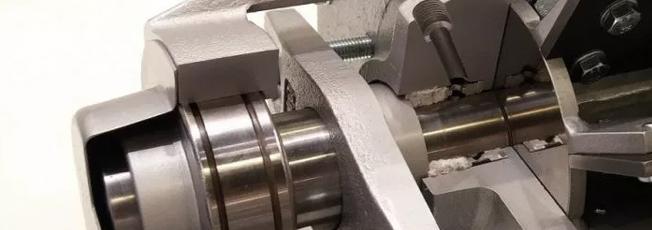
5- Clearances must suit the operating temperatures and parameters of the spray dryer. Otherwise, different problems (seizure, rubbing against the housing) may arise at different temperatures.
More examples could be given, but rotary valves used below or at the outlet of a dryer can essentially be considered in this way. The rotary valves we manufacture for spray dryers essentially have these features, plus additional features not mentioned here. With the experience gained over many years, we have the special equipment and know-how for this job, which calls for careful selection.
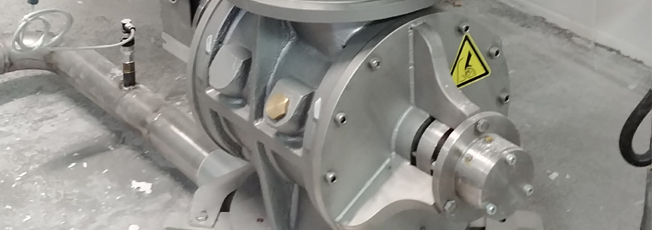
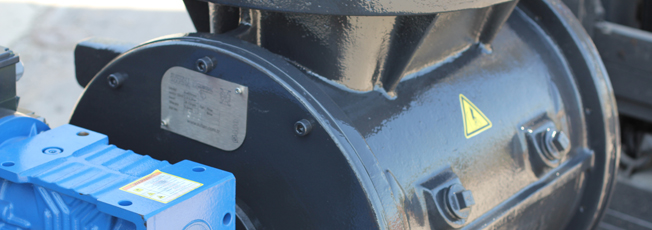
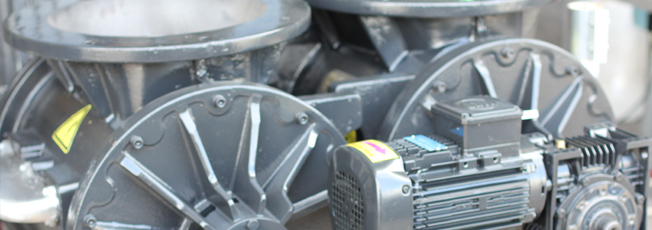
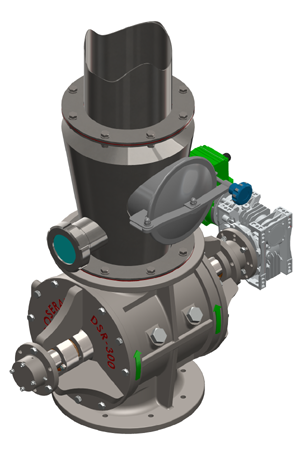
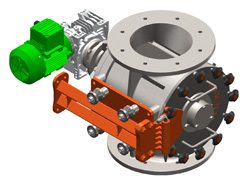
In the images to the side and below, a special manhole has been fitted to the rotary valve under the dryer for easy cleaning. The process is washed down, particularly when drying food and products prone to caking (PST, etc.). There is no need to remove the rotary valve for proper washing. Instead, once safety requirements (position switch) are met, the manhole allows the operator to carry out drying, cleaning and inspection easily. Furthermore, the vane design of the rotary valve to be used under the drying tower varies according to the type of powder passing through it. As stated above, the foremost of these differences are the number of vanes on the rotor, the vane type (radiused vane) and the clearance.
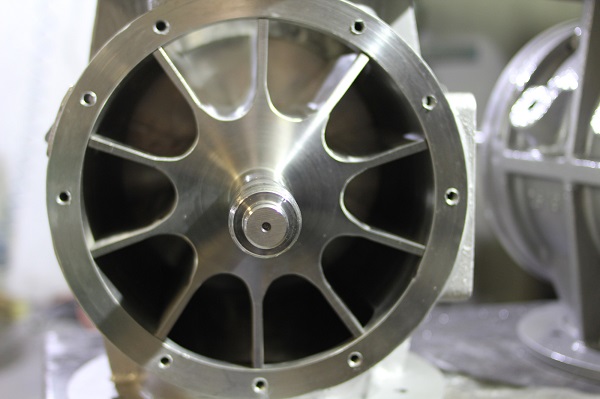
The guiding principle in our design and manufacture of rotary valves and airlocks is to produce products for industrial plants that offer high sealing performance, minimum maintenance and maximum durability.
 Rotary Valve Catalog (PDF)