
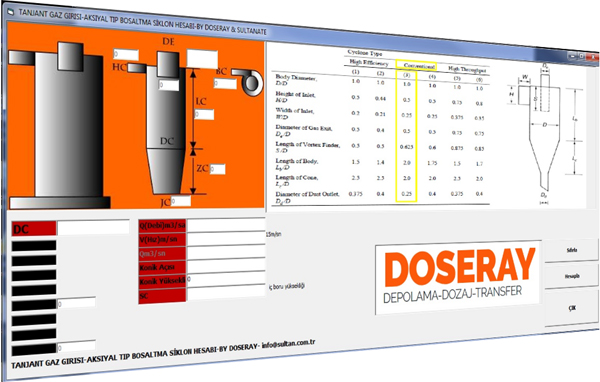
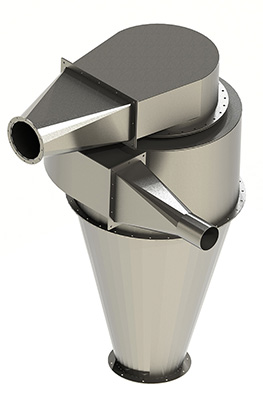
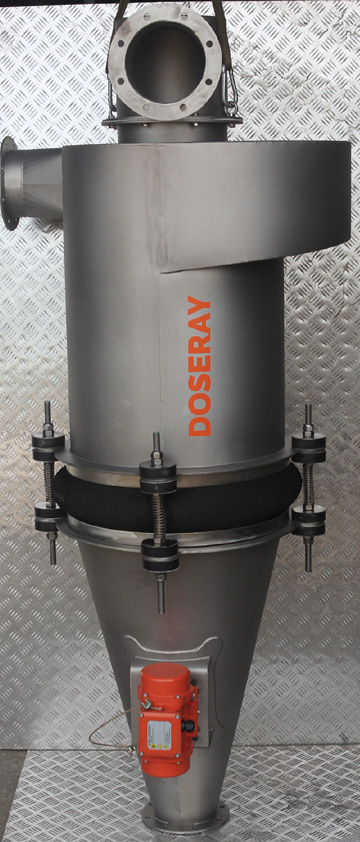
Since all raw materials subjected to pneumatic conveying are in powder or granular form, dust is inevitably generated once they enter the process. To prevent this and to separate the material from the air again, dust collectors, in other words cyclones, multi-cyclones and filters, must be used. In short, a cyclone is a steel structure that performs the first stage of dust separation by centrifugal motion. As explained, cyclones are dust separators and, depending on the type of process, require a star feeder or rotary valve at the bottom to discharge the dust. The flow-type rotary valves we manufacture work in harmony with the equipment according to cyclone size. Our company can also provide solutions for cyclone systems that operate integrated with a rotary valve.
The main principle behind the cyclones we design and manufacture is to produce highly durable products for industrial plants. The cyclones we manufacture for all types of dust processes work in combination with filters to achieve maximum efficiency and dust collection capacity.
 Rotary Valve Catalog (PDF)